
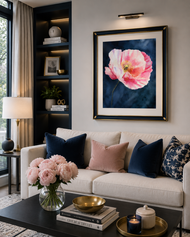
12 Living Room Art Examples That Feel Like Home
Jul 12th 2026
A living room often carries the quiet work of a home. It is where coffee is shared, feet are put up, grandchildren visit, and the day finally softens. The best living room art examples do more than fill an empty wall. They help the room feel welcoming, personal, and peacefully lived in.
There is no single right choice. A bold abstract piece may suit one home beautifully, while another feels most complete with a sunlit barn, a gathering of wildflowers, or a beloved bird resting on a branch. What matters is choosing art that gives you a small lift each time you look up.
Living room art examples for a warmer home
1. A large landscape above the sofa
A wide landscape is one of the most natural choices for the wall above a sofa. A country road, quiet field, shoreline, or distant mountains can visually open a room, especially when the living room itself has limited windows or a modest footprint.
Choose a horizontal piece that is roughly two-thirds the width of the sofa. It does not need to match every color in the room. In fact, a landscape with soft greens, blue skies, warm earth, or touches of gold often brings harmony without looking overly coordinated. This is a lovely place for a print of a favorite outdoor scene when an original feels beyond the budget.
2. A peaceful floral painting in a reading corner
A reading chair, side table, and lamp create a little retreat within the living room. A floral artwork nearby gives that retreat an extra note of tenderness. Think peonies in a garden, a vase of cheerful blooms, or soft wildflowers that feel freshly gathered.
Floral art is especially helpful in rooms with neutral upholstery. It can introduce color in a gentle way, without requiring a bright rug or dramatic curtains. If your room already has strong patterns, look for a simpler floral composition with a calm background so the wall does not become too busy.
3. A pair of complementary nature prints
Two related prints can make a room feel considered and collected. They might be two garden scenes, two birds, a barn and a field, or two skies painted in similar colors. The connection can be subtle. Matching frames and equal-sized mats are usually enough to make different subjects feel like a pair.
This arrangement works beautifully over narrow console tables, between windows, or above two chairs. Leave a few inches between the frames so each image has room to breathe. The goal is a peaceful grouping, not a crowded row.
4. A small gallery wall of meaningful places
Gallery walls do not have to be filled with trendy graphics or dozens of frames. A more personal version might include six to eight small artworks that recall the places and moments you love: a boat on quiet water, a country church, spring blossoms, a familiar bird, or a sky that reminds you of summer evenings.
Keep one element consistent, such as frame color, mat style, or a shared palette. Then allow the subjects to vary. This is a beautiful approach for art collectors who enjoy adding one piece at a time, rather than waiting until they can commit to a single large work.
5. A tree scene for a room that needs grounding
Trees have a steady, reassuring presence. Their branches, trunks, and changing leaves offer shape and texture while still feeling restful. A tree painting can be especially lovely in a living room with traditional furnishings, wood tones, stone details, or family heirlooms.
For a light room, a spring tree or birch grove can feel airy. For a cozier room, consider an autumn tree with russet and amber tones. The season does not have to match the season outside your window. Choose the one that gives the feeling you want to live with all year.
6. A bright sky above a mantel
The mantel is a natural focal point, but it is also easy to overfill with objects. One artwork featuring an open sky can bring a sense of calm to that busy spot. Clouds, sunrise color, a soft moon, or rays breaking through can feel uplifting without becoming overly formal.
Because mantels sit above eye level, a piece with an uncluttered composition often reads best there. Avoid placing art so high that you have to tilt your head to enjoy it. If possible, lean a medium-sized framed print against the wall first to test the height before hanging anything.
7. Bird art beside a window
Bird paintings and prints bring a touch of life to a living room without asking for much space. A cardinal, bluebird, chickadee, or graceful shorebird can be a small daily delight, especially near a window where real birds may pass by.
This is a good choice for a narrow wall, a spot above a small cabinet, or the space beside French doors. Bird art also makes a thoughtful addition to a room decorated with family treasures, gardening books, or pieces collected on travels. It feels personal without needing an explanation.
8. One original piece in an otherwise simple room
A single original painting has a special kind of presence. You can see the artist's decisions in the brushwork, color, and little details that make the piece its own. In a simply furnished living room, an original can become the element that makes the space feel truly yours.
This does not mean every wall needs expensive art. A smaller original can be just as meaningful as a large canvas, particularly when it is placed where it can be appreciated up close. Hang it above a side table, near a favorite chair, or in the first spot you see when entering the room.
9. A barn or farmhouse scene for familiar comfort
Barns, weathered fences, and rural fields have a way of suggesting home, heritage, and simpler rhythms. They suit farmhouse-inspired rooms, of course, but they can also warm up more classic or contemporary spaces. The key is choosing a piece that feels sincere rather than overly themed.
A softly painted red barn can echo warm wood and brick. A white farmhouse under a blue sky can lighten a room with darker furniture. Let the artwork offer a memory or mood, not a decorating costume.
10. A vertical floral for a narrow wall
Some of the most useful living room art examples are not grand centerpieces. A tall, narrow floral print can transform the awkward strip of wall between a doorway and a window or the small space at the end of a sofa.
Vertical art draws the eye upward, which can make lower ceilings feel a little more generous. Choose a bloom with colors already present in small ways around the room, perhaps in a pillow, ceramic bowl, or throw. That soft repetition helps the space feel tied together.
11. A seasonal rotation of small prints
If you enjoy refreshing your home with the seasons, small framed prints offer an easy and affordable way to do it. Spring flowers can brighten the room after winter. Summer boats and gardens feel easygoing. Autumn trees bring warmth, while snowy landscapes or heavenly skies can create a quiet winter mood.
Use the same frame and swap the art inside, or keep a small ledge where two or three pieces can be changed as the months pass. This approach is practical for those who enjoy variety but do not want to repaint or redecorate each season.
12. Art that carries a gentle message of hope
Sometimes the most fitting artwork is the one that makes you pause. A glowing sky, a path through a field, butterflies among blooms, or light on water can offer a feeling of hope that is hard to put into words. These images are not merely decorative. They become part of the emotional atmosphere of the home.
Choose this kind of art for the wall you naturally see from your usual seat. A living room should not feel like a showroom. It should hold reminders of beauty, faith, memory, and the natural world beyond the door.
How to choose the right size and placement
Before choosing a favorite subject, take a moment to consider scale. Art above a sofa or mantel generally needs enough visual weight to hold its own against the furniture below it. One small frame floating alone over a large sofa can feel lost, even when the image itself is lovely.
If a large piece is not practical, create presence with a pair or a small grouping. In most seating areas, hang art so the center of the arrangement is close to eye level when standing. Above furniture, leave enough space for the pieces to feel connected, but not so little that they look squeezed against the top edge.
Frame choice matters, too. Natural wood adds warmth to landscapes and florals. White frames can make light, airy paintings feel fresh. Black frames offer gentle definition in a room with modern lines. There is no need for every frame in the living room to match exactly, but repeating one or two finishes keeps the collection from feeling scattered.
At Art By Marion Irwin, nature-inspired art is created for these everyday moments: the chair by the lamp, the mantel that needs a little light, and the wall that deserves more than decoration. Let your living room hold art that feels like a welcome home, every time you walk in.